


March or May? Why a spring wedding session in the mountains is a logistical conundrum
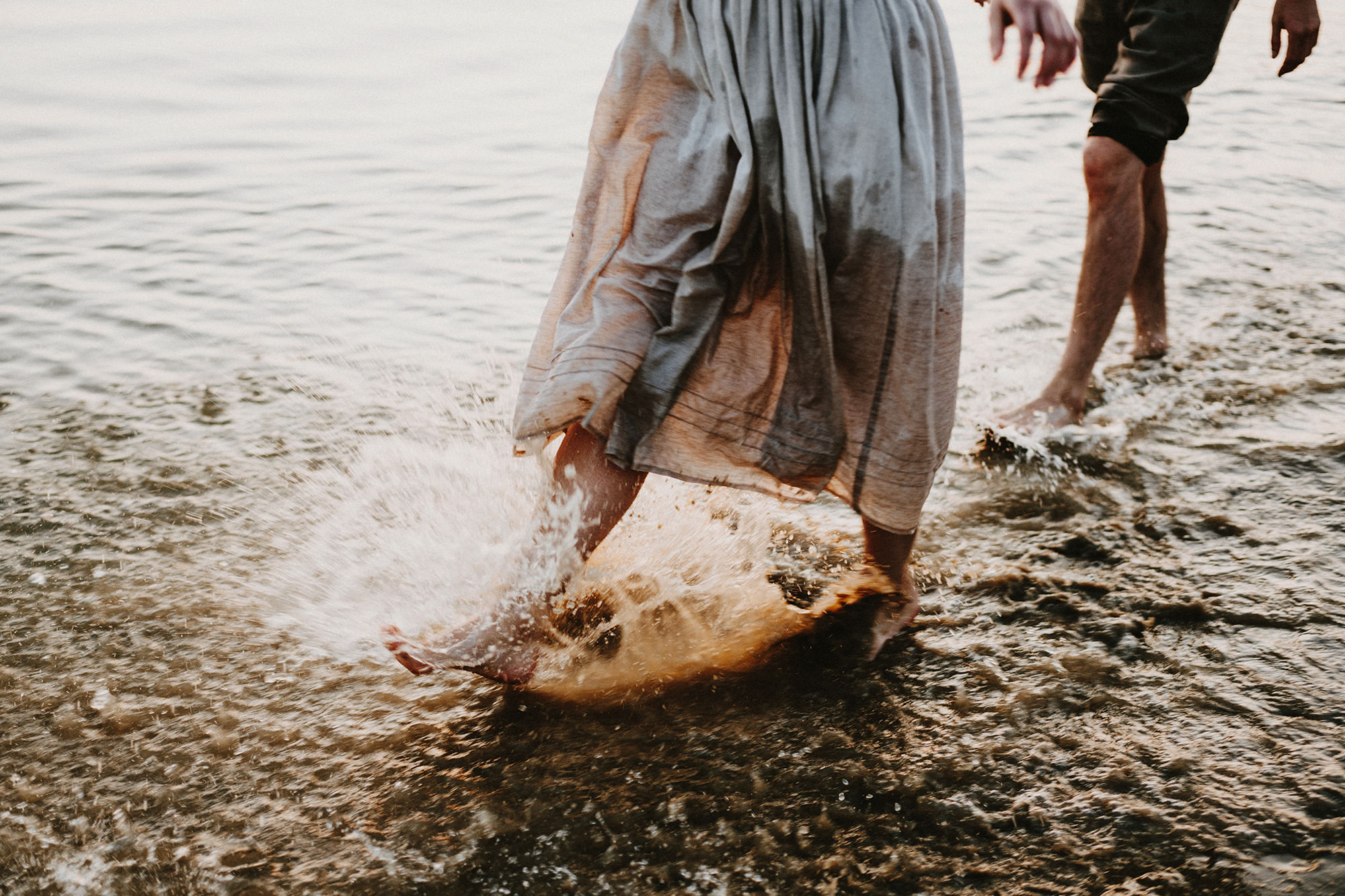
When planning a spring wedding outdoor session in the mountains, most couples see with their eyes only purple carpets of crocuses and warm sunshine, but the reality in the Podhale can be much more… challenging – especially for your white dress. Spring session is a fascinating time of transition, where March and April can serve us both remnants of winter and deep mud on the lower trails.
As a photographer who has seen more than one “weather window” turn into a snowstorm, I’ve put together this guide to take the fears out of capricious spring and answer that one most important question: will my dress survive it? I promise you that surviving a session in the Podhale without a ruined creation and soaked feet is possible, as long as you approach the subject with a plan and the knowledge that a few inches of dirty seam is not a tragedy, but proof of a great adventure. In this post, you’ll learn how to tame the conditions you don’t see on Instagram, and which places to choose so that your souvenir is full of authentic joy, not a stressful struggle for every step in the “scab”.
Expert survival: What to bring to a wedding session in the mountains to avoid getting cold?
The basis for preparing for a spring outdoor trip is to understand that the weather in the Podhale region is rarely predictable. Even if we enjoy the sun in Zakopane, in clearings exposed to gusts of wind the perceptible temperature can be drastically lower. That’s why my tried-and-true way to keep the bride and groom comfortable is to dress for onions. A key element of your closet that won’t be seen in photos is thin thermal underwear. Thin leggings worn under the wedding dress are a real lifesaver, allowing you to report freely without shivering from the cold, even when the wedding session in the mountains takes place on a windy day.
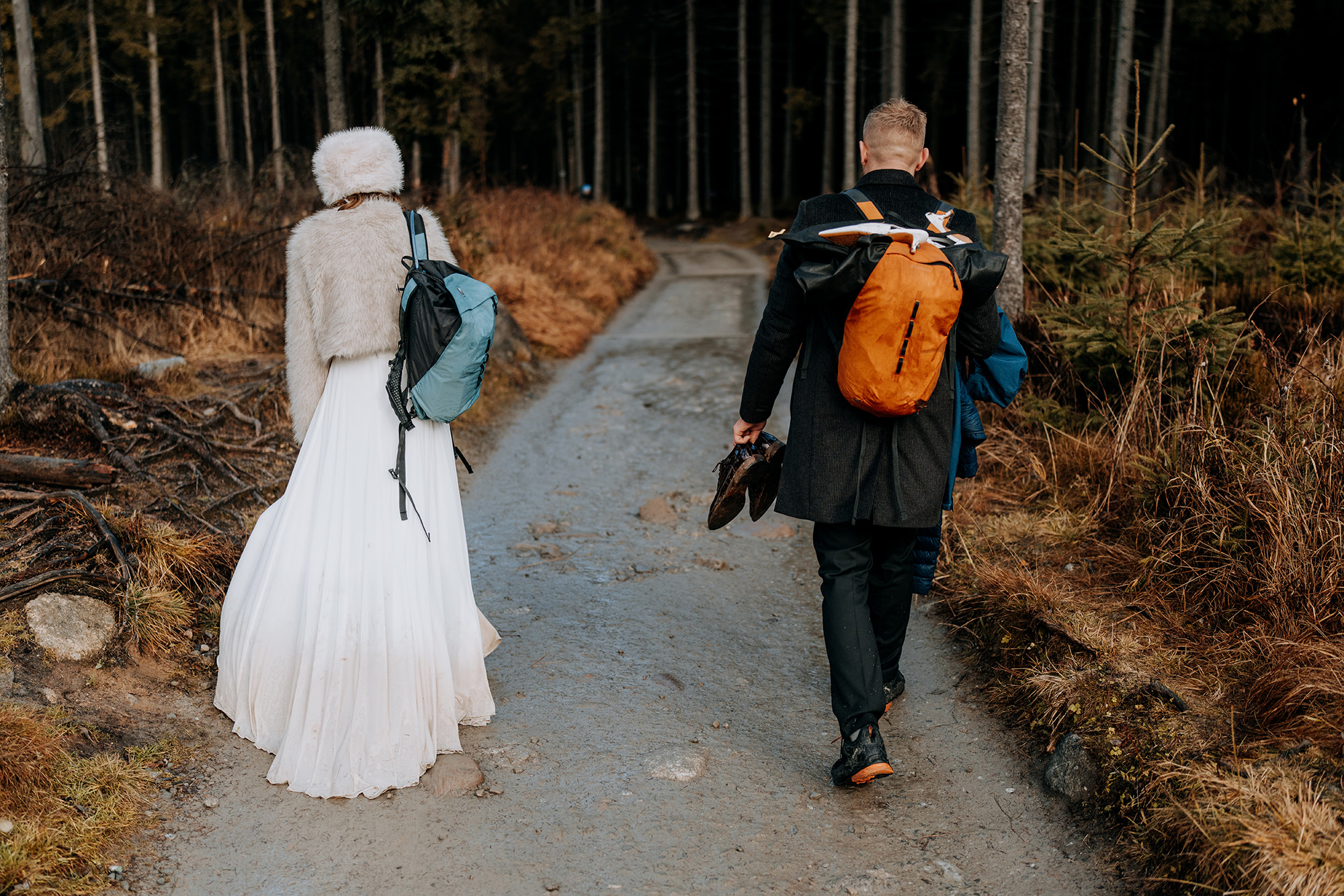
When it comes to footwear, my approach is simple: we’re in the mountains, so sturdy trekking shoes are most appropriate here. Personally, I love frames where you can be seen in full mountain gear – it adds authenticity to the photos and shows the true atmosphere of your adventure. Of course, if you are very keen on a classic look, you can take your wedding shoes in a backpack and put them on only for the time of specific shots, but trekking shoes provide you with safety and stability on slippery spring ground above all. Be sure to also throw a large thermos of hot, sweet tea in your backpack, as well as energy snacks such as chocolate to help you recover quickly between shots. Remember that even the piercing wind can be our ally – it’s what makes the dress and hair arrange itself in a way that can’t be directed in any studio.
Your dress is not a relic
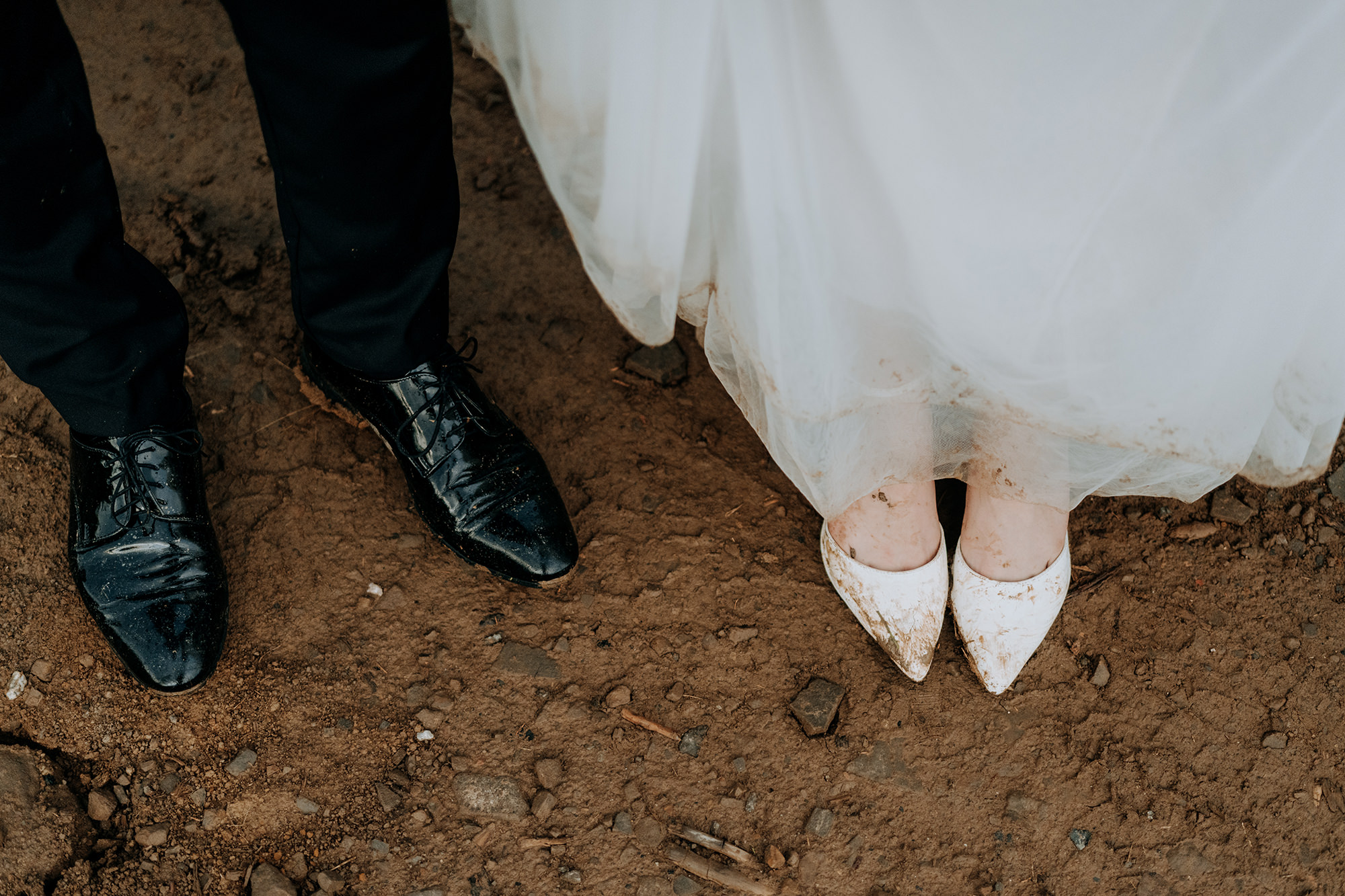
This is the moment when we have to tell ourselves straight: the mountains are not a photo studio. There will be dust, there will be dew, you might get mud on the trail. If you spend a 2-hour session clinging to the train and checking every spot, your photos will be full of tension, not love.
- And so it won’t be visible: In wide-angle photos (i.e., the most epic ones in the mountains), the dirty bottom of the dress is completely invisible.
- Laundry magic: 99% of “mountain” dirt is dust and mud, which a professional dry cleaner removes without a trace. The dress after a session in the mountains does not have to go to the trash at all.
- Emotions > Material: You will wear the gown once (well, maybe twice). You’ll look at the photos from the shoot for decades to come. What do you prefer: a pristine gown in your closet or a breathtaking shot on Rusinowa Glade, where you look free and happy?
How to minimize losses? (Practical tricks)
Hitching up: Don’t walk the entire trail in your gown. Change at the top or prop the train up high with safety pins or a belt for the walk.
Moist wipes: They will save the situation if you dirty the top. Leave the bottom alone :).
5 tried-and-true places with easy access – views without fighting the mud
Choosing the right location is a key part of planning an outdoor vacation at a time when nature is just waking up and the weather can surprise you with the sudden return of winter. In spring, instead of risking an hours-long march through soggy trails inside a national park, it’s worth betting on outlying locations that offer spectacular panoramas with minimal logistical effort. Such a strategic approach is not taking the easy way out, but allows you to keep your outfits looking impeccable and your energy good, which directly translates into quality photos.
Here is a compilation of my tried-and-true points that work best at this time of year:
- Przełęcz nad Łapszanka – this is undoubtedly one of the most photogenic locations in all of Podhale, famous for its distinctive chapel and stunning view of the Belianske Tatras. The biggest advantage of this place is the fact that almost straight from the car you enter the scenic clearing, which in March or April allows you to completely avoid wading in slush and keep your shoes clean.
- Litwinka in Czarna Góra – this place offers a rare 360-degree panorama, covering not only the Tatra Mountains, but also the Gorce and Pieniny Mountains. Thanks to the ability to get to the Millennium Cross itself, we can work very efficiently, and in the event of a sudden break in the weather or strong wind, take shelter in the car in a few seconds to wait out a more difficult moment.
- Glodowka Glade – if you dream of frames where the majestic High Tatras form a close and clear background, Glodowka will be a hit. The panorama, accessible directly from the parking lot at the hostel, allows for a quick and effective session, which is invaluable on days when forecasts are uncertain and time is of the essence.
- The mountain view from Zeb – the highest village in Poland – is a natural observation deck from which the mountains seem to be literally at our fingertips. Walking along the paved paths along the ridge, we can enjoy the beauty of the mountain landscape without having to step on the sinuous spring ground, which gives us a lot of freedom in choosing our frames.
- Zdiar and the Slovak surroundings of the Belian Tatras – this location offers a slightly different, idyllic atmosphere with picturesque meadows and traditional buildings in the background. Spring on the Slovakian side often manifests itself more quickly in juicy greenery, which is a beautiful, optimistic change for the still harsh and gray peaks we can admire from the vantage points there.
TPN permit and paperwork in 2026 – what do you need to know?
When planning your dream wedding session in the mountains, especially in the area of the Tatra National Park, do not forget about formal issues, which are key to maintaining peace of mind and avoiding unnecessary stress during your session. Carrying out a professional photo session, both wedding and family, in the area of the Tatra National Park requires payment of a one-time fee, which is currently 250 PLN gross for one photo day.
This is an amount that is paid online at https://tpn.gov.pl/sesja-slubna, and what is very important for the logistics of the whole event, having such a permit exempts both the photographer and the bride and groom from additional park entrance fees. As your photographer, I always make sure that we move within the limits of the current law, so I support you in completing these formalities or take them on myself so that you can focus solely on the emotions and the beautiful views. However, we must keep in mind the park’s ironclad rules: under no circumstances are people allowed to stray from designated hiking trails or use a drone during the shoot in order to protect the Tatra nature.
Participants in the session are required to comply with all rules of order, and my task as an expert is to plan the frames in such a way that you look natural and at ease in the photos, while remaining in full compliance with the rules of the national park.
Extensive text on what place to choose for a wedding session in the Tatra Mountains can be found here:
FAQ – Wedding session in the mountains (Most common concerns of couples)
Will my wedding dress get irreparably damaged?
Rest assured, “damage” and “soiling” are two different things. Your dress will 99% catch some mud or dust at the very bottom, but it’s nothing a professional dry cleaner can’t remove. Most of the dirt is invisible in photos, and the joy of the session is worth a few spots on the hem.
Do I have to climb to the top in my wedding shoes?
Absolutely not! Your safety is paramount. We cover the entire route in comfortable trekking shoes. Stilettos or slippers land in your backpack and you only put them on when the ground is stable and safe, and we take a particular shot. Although I think the trekking shoes in duet with the dress look brilliant in the photos!
What if the weather suddenly turns bad on the day of the session?
In the mountains, weather is a lottery, so we are always in touch and look for the so-called “weather window”. Remember, however, that fog, clouds or even light snow create an amazing, cinematic atmosphere in the photos, which no harsh sun can convey. Authentic mountains are whimsical mountains!
How long does such a session last and is it very tiring?
I always choose the location of the session according to your desire and condition. We don’t have to conquer Rysy Mountains to have epic views – I know plenty of clearings in Podhale accessible after a short walk. We usually reserve about 2-3 hours to catch the best light in a relaxed and unhurried atmosphere.